Plain-english guide · with Y&P Labs

Peptides,
explained honestly.

What they are, what each one is actually studied for, and how they're thought to work. No jargon wall, no hype. Put together with Y&P Labs, Roegan's research-peptide partner, and written straight including the parts the category usually skips.

Jump to the compounds

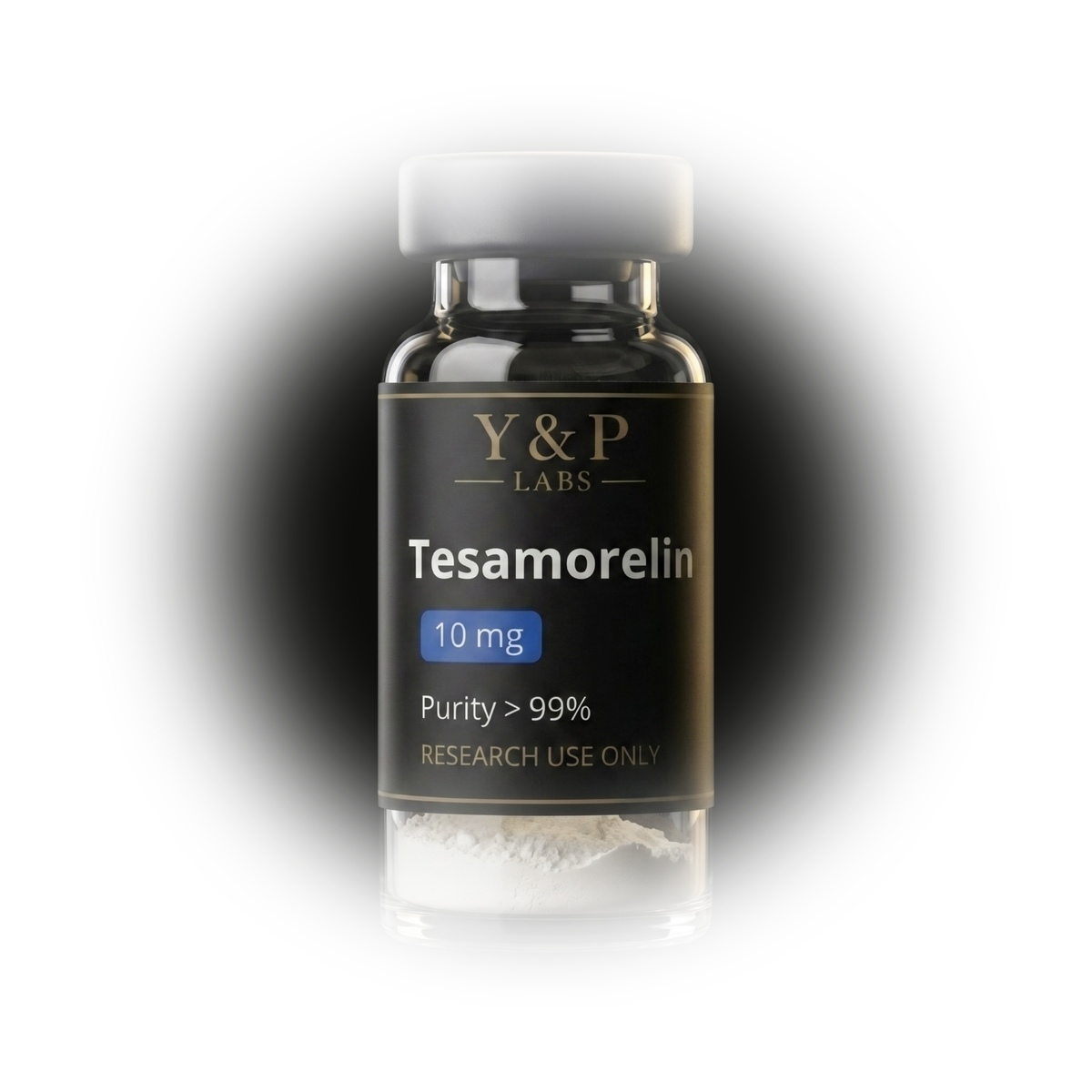
Y&P Labs Tesamorelin research peptide vial, 10 mg, tested to over 99% purity
01 · The basics

A peptide is just
a short chain.

Amino acids linked end to end by peptide bonds. That's the whole definition. Your body already makes thousands of them, and it uses them as messengers.

The line between "peptide" and "protein" is a convention, not a chemical fact.

Roughly: under about 50 amino acids and we call it a peptide. Over that and we call it a protein. There's no hard boundary anywhere in the rulebook. IUPAC defines a polypeptide as ten residues or more and leaves the rest to custom.

This matters more than it sounds. Several products marketed as "peptides" aren't peptides at all, and at least one sits well over the line into protein territory. The chart is the fastest way to see it.

Chain length, by residue count
  • GHK-Cu3
  • Ipamorelin5
  • TB-5007
  • BPC-15715
  • MOTS-c16
  • CJC-129529
  • Retatrutide39
  • Thymosin β443
  • Tesamorelin44
  • IGF-1 LR383
Peptide range Over the ~50 aa line
Worth knowing

Not everything sold as a peptide is one.

NAD+ is a dinucleotide coenzyme with no amino acids and no peptide bonds. 5-Amino-1MQ is a small-molecule quinolinium salt weighing about 159 daltons. GHK-Cu and AHK-Cu are real tripeptides, but bound to a copper ion that's integral to the activity, making them coordination complexes.

Common mix-up

TB-500 is not thymosin β4.

They get used interchangeably almost everywhere, and it's wrong. Thymosin β4 is a 43-amino-acid protein. TB-500 is a 7-amino-acid fragment of it: Ac-LKKTETQ, the actin-binding domain. The FDA reviewed vendor websites and found fifteen of them conflating the two. The human trial data people cite for "TB-500" was run on the full-length protein, as eye drops and topical gels.

02 · Mechanism

They don't enter cells.
They knock.

Most peptides are too large and too water-loving to cross a cell membrane. So they work from the outside, binding surface receptors and letting the cell do the rest.

01

Binding

The peptide docks onto a receptor sitting in the cell membrane, usually a G-protein-coupled receptor: seven helices threaded through the membrane with the business end facing out. Shape is everything here, and changing a single amino acid can make the fit vanish.

02

Conformational change

Binding twists the receptor. That twist reaches through the membrane and activates a G-protein on the inside, swapping GDP for GTP on its alpha subunit. The message has crossed the wall without the messenger ever going through it.

03

Second messengers

The G-protein switches on an effector enzyme, which floods the cell with small signalling molecules like cAMP, calcium and IP₃. This is the amplifier stage, and it's the reason the whole system works at vanishingly small doses.

04

Response

Kinase cascades fire, enzymes change activity, genes get transcribed. One bound peptide can generate thousands of downstream signal molecules, which is why picomolar concentrations produce effects you can measure.

03 · The landscape

What each one is,
and what it's for.

Every compound Y&P Labs carries, in plain language: what it actually is, what it's studied for, and how it's thought to work. Grouped by what people use them for, with a link to each batch certificate of analysis.

Repair & recovery

The reason most people end up on this page. These are the compounds researched for getting connective tissue, muscle and gut lining back together faster.

BPC-157

15 aa

Studied forTendon, ligament & gut repair

A short chain of 15 amino acids, originally identified as a fragment of a protective protein found in human gastric juice. It's the single most talked-about compound in the recovery corner of the peptide world.

How it works
Thought to work by encouraging new blood vessel growth into damaged tissue and by nudging tendon cells to migrate and rebuild. Blood supply is usually the bottleneck in tendon and ligament healing, which is the logic behind the interest.
Evidence
Strong, consistent results in rats. No published study has ever given it to a person by injection, so the human side is genuinely unknown.

TB-500

7 aa

Studied forSoft-tissue repair & flexibility

A seven-amino-acid piece of a larger natural protein called thymosin β4, specifically the section that binds actin, one of the main structural proteins inside your cells. Worth knowing: TB-500 and thymosin β4 get used as if they're the same thing, and they aren't.

How it works
Actin drives how cells move. By binding it, the fragment is thought to help cells migrate into an injury site, form new blood vessels, and calm inflammation while tissue knits back together.
Evidence
Rodent and lab-dish work only. The full-length protein has real human trials, but as eye drops and wound gels, not injections for training injuries.

Wolverine

Blend

Studied forCombined injury protocol

BPC-157 and TB-500 packaged together. The nickname comes from the comic-book healing factor, and it's the most popular pairing in the injury-recovery space.

How it works
The two are combined because they're thought to work through different routes: BPC-157 on blood-vessel growth, TB-500 on cell migration. The idea is that they cover different stages of repair.
Evidence
Both components have rodent data. Nobody has studied the combination in any species, so how they interact is an open question.

GLOW

Blend

Studied forRepair plus skin & hair

BPC-157 and TB-500 with GHK-Cu added. The name points at the third ingredient: the copper peptide is the one associated with skin quality, so this blend gets picked when people want the cosmetic side alongside the repair side.

How it works
Same repair rationale as Wolverine, plus GHK-Cu's role in collagen and elastin production.
Evidence
Component-by-component only. The three-way blend has never been studied together.

Growth hormone & lean mass

Compounds that ask your own pituitary gland to release more growth hormone, rather than injecting growth hormone directly. This is the best-studied group here.

CJC-1295 + Ipamorelin

29 + 5 aa

Studied forGrowth hormone, sleep & recovery

The most common pairing in the GH category. CJC-1295 is a modified version of the natural signal your brain uses to request growth hormone; ipamorelin is a five-amino-acid compound that mimics ghrelin, the hunger hormone that also triggers GH release.

How it works
They press two different buttons on the same pituitary cells. One raises the size of each GH pulse, the other adds extra pulses and quiets the signal that would normally shut release down. Ipamorelin was specifically designed to do this without also spiking cortisol or prolactin.
Evidence
Human trials confirm the blood work moves: GH up several-fold, IGF-1 up around 50%. No trial has tested whether that translates into faster healing or better recovery.

Tesamorelin

44 aa

Studied forVisceral (deep belly) fat

The one compound on this page with genuine FDA approval, sold as EGRIFTA. It's a stabilised version of the natural growth-hormone-releasing signal, modified so the body breaks it down more slowly.

How it works
Prompts the pituitary to release growth hormone in its normal rhythm, which raises IGF-1. Deep abdominal fat happens to be unusually sensitive to growth hormone, which is why the effect shows up there and not in fat under the skin.
Evidence
Two large randomised trials, about 806 people, cut visceral fat 15 to 18% against placebo. Every one of those trials enrolled people with HIV-related fat redistribution, not healthy lifters.

IGF-1 LR3

83 aa

Studied forMuscle growth signalling

A lab-engineered version of IGF-1, the growth factor that actually carries out most of growth hormone's muscle-building instructions. At 83 amino acids it's really a small protein, and it's catalogued by scientific suppliers as a cell-culture reagent.

How it works
Normally over 95% of circulating IGF-1 is held inactive by binding proteins. This version is modified so those binding proteins can't grab it, leaving far more of it free and active.
Evidence
No human studies exist at all. Not completed, not registered, none. Everything known comes from cell cultures and animals.

Skin, hair & collagen

Copper-bound peptides that turn up in serious skincare as well as research vials. This is the one group with real randomised human data behind it.

GHK-Cu

3 aa + Cu

Studied forSkin firmness, collagen & wounds

A tiny three-amino-acid peptide bound to a copper ion. Your own blood contains it, and levels drop steadily with age, which is what got researchers interested in the first place. It's a long-established cosmetic ingredient.

How it works
Delivers copper to the enzymes that build connective tissue and signals skin cells to produce more collagen, elastin and the molecules that hold water in the skin.
Evidence
The strongest human evidence here, and all of it topical: small randomised studies show improved skin thickness, hydration and elasticity. Nothing tested by injection.

AHK-Cu

3 aa + Cu

Studied forHair follicles & scalp

GHK-Cu's lesser-known relative. Same copper-peptide idea, but the research attention has gone to hair follicles rather than skin or connective tissue.

How it works
Studied for stimulating the cells at the base of the hair follicle and supporting the blood supply that feeds them.
Evidence
Lab-dish work and cosmetic formulation use. No randomised human trials, and considerably less studied than GHK-Cu.

Metabolism & energy

Filed under recovery because of the energy-systems link, though what they're actually researched for is fat loss, insulin sensitivity and cellular energy.

MOTS-c

16 aa

Studied forMetabolic health & endurance

A genuinely unusual molecule: a 16-amino-acid peptide coded inside your mitochondrial DNA rather than the DNA in the cell nucleus. Only described in 2015, which is recent for something your body already makes.

How it works
Thought to activate AMPK, the enzyme that acts as your cells' low-fuel sensor, improving how the body handles glucose under stress. Levels naturally rise with exercise.
Evidence
Human studies exist but only measure the MOTS-c people already have circulating. Nobody has been given it. The FDA notes its molecular target is still unidentified.

NAD+

Coenzyme

Studied forCellular energy & ageing

Not a peptide at all, despite the company it keeps. NAD+ is a coenzyme found in every living cell, central to turning food into usable energy, and levels fall as you age. That decline is the whole premise of the anti-ageing interest.

How it works
Ferries electrons through the energy-production pathways in your mitochondria, and is the required fuel for sirtuins and PARPs, the enzymes involved in DNA repair and cellular housekeeping.
Evidence
The most-studied item on this page: over a dozen human trials with good safety. Supplements reliably raise blood NAD+ levels, but a meta-analysis found minimal effect on muscle mass, grip strength or gait speed.

5-Amino-1MQ

Small molecule

Studied forFat cell metabolism

Also not a peptide. It's a small molecule roughly a tenth the weight of the peptides around it, grouped with them commercially rather than scientifically.

How it works
Blocks an enzyme called NNMT that's highly active in fat tissue. Blocking it is proposed to make fat cells burn more of their own stored energy.
Evidence
Promising rodent work on fat metabolism. No human trials.

Retatrutide

39 aa

Studied forAppetite & weight loss

A serious pharmaceutical drug candidate in late-stage development for obesity, in the same family as semaglutide and tirzepatide but hitting three targets instead of one or two.

How it works
Activates the GIP, GLP-1 and glucagon receptors together, which slows stomach emptying, reduces appetite and increases energy expenditure.
Evidence
Real, large, industry-run clinical trials with substantial weight-loss results. This one has actual data behind it.

Focus & mood

Developed in Russia and used there clinically. Included for completeness, since neither has a connection to physical recovery.

Selank

7 aa

Studied forAnxiety & calm focus

A synthetic version of tuftsin, a natural immune-signalling peptide, modified to last longer in the body. Registered as a medication in Russia and used there as an anti-anxiety treatment.

How it works
Studied for effects on GABA and serotonin signalling, the systems most anti-anxiety medications act on, reportedly without the sedation or dependence of benzodiazepines.
Evidence
A real Russian-language research base, but no Western regulatory review and no FDA approval.

Semax

7 aa

Studied forFocus, memory & recall

A modified fragment of ACTH, a hormone your pituitary already produces, engineered to be stable enough to last. Also Russian-developed and used there for cognitive and stroke-recovery indications.

How it works
Studied for raising BDNF, a protein involved in forming and maintaining connections between neurons, and for effects on attention and memory.
Evidence
Russian clinical use and published research. Reviewed by the FDA's compounding committee in July 2026 with a recommendation against listing.

Nothing on this page will outperform sleeping eight hours, eating enough protein and running a program you don't quit. That's the actual order of operations, and recovery compounds sit at the very bottom of it. The part that does the work is free.

If you haven't built the base yet, the Blueprint is where to start. If you have and you want it dialled in properly, that's what coaching is for. And if you're researching the compounds above, do it with a source that publishes its testing, like Y&P Labs.

Recovery partner

If you're going to
research it, verify it.

In a category where a peer-reviewed audit found that only 44% of research peptides actually met their stated purity, and where analyses of internet-sourced product have turned up heavy metals, the supplier matters more than the compound. Y&P Labs is who Roegan points people to: US-based, HPLC and mass-spec tested through an independent lab, with a batch-specific certificate of analysis on every order via QR code.

A COA is a floor rather than a guarantee. It's a statement about one specific batch, and it doesn't cover everything. But publishing batch-matched third-party COAs is more than most of this industry does.

Research use only. Not intended for human or veterinary consumption. Not medical advice, so speak to a qualified physician. Prohibited in drug-tested sport. Follow the laws where you live.

Common questions

The rest of it.

Does "research use only" mean it's approved for people?

No, it means the opposite. The label states the compound is sold as a laboratory reagent and is not approved, evaluated or intended for human or veterinary consumption. It's not an FDA clearance and it's not a safety finding. The FDA determines a product's status by its intended use, and has said in writing that a research-use disclaimer doesn't change that when a seller's own marketing implies human use.

If there's no human data, where do all the claims come from?

Rodent studies, cell culture, and anecdote. Animal healing models are genuinely interesting and they're where drug development starts, but the attrition rate from promising rodent data to a working human drug is brutal, and most compounds don't survive it. When a page tells you a peptide "heals tendons," ask whose tendons. For most of the tissue-repair category, the honest answer is rats.

Who is Y&P Labs, and why are they linked throughout?

Y&P Labs is the research-peptide supplier Roegan points people to, and every compound on this page links to its product and batch COA there. They're US-based, ship within 24 hours, and run independent HPLC and mass-spec testing with a batch-specific certificate of analysis attached to every order by QR code. Roegan's code COLA10 takes 10% off.

Why does "99% purity" not settle the question?

Because it's 99% of what the detector saw at one wavelength. It says nothing about bacterial endotoxin, microbial contamination, peptide aggregates, heavy metals, or how much compound is actually in the vial. Those are the things most likely to cause a problem for anyone injecting, and a standard HPLC purity figure doesn't test for a single one of them.

Can I use these if I compete in a tested sport?

No. Assume a positive test. BPC-157 sits in WADA class S0, TB-500 and IGF-1 analogues in S2.3, GHRH analogues and GH secretagogues in S2, and MOTS-c in S4.4. All are prohibited at all times, in and out of competition. S2 is non-specified, the harshest sanctioning tier. FDA approval doesn't create an exemption either; tesamorelin is approved and still prohibited.

Is any of this medical advice?

No. This page is educational content about the pharmacology and regulatory status of research compounds. It isn't medical advice, it isn't a recommendation to use anything described here, and it can't account for your health history. Talk to a qualified physician before making decisions about anything you put in your body.

The part that actually works

Train hard.
Recover harder.

Roegan added 38 lbs of lean muscle in 14 months with a pull-up bar and no shortcuts. Start where he started.

Apply for Coaching

⚡ Or start with the Blueprint for $29.99, instant access